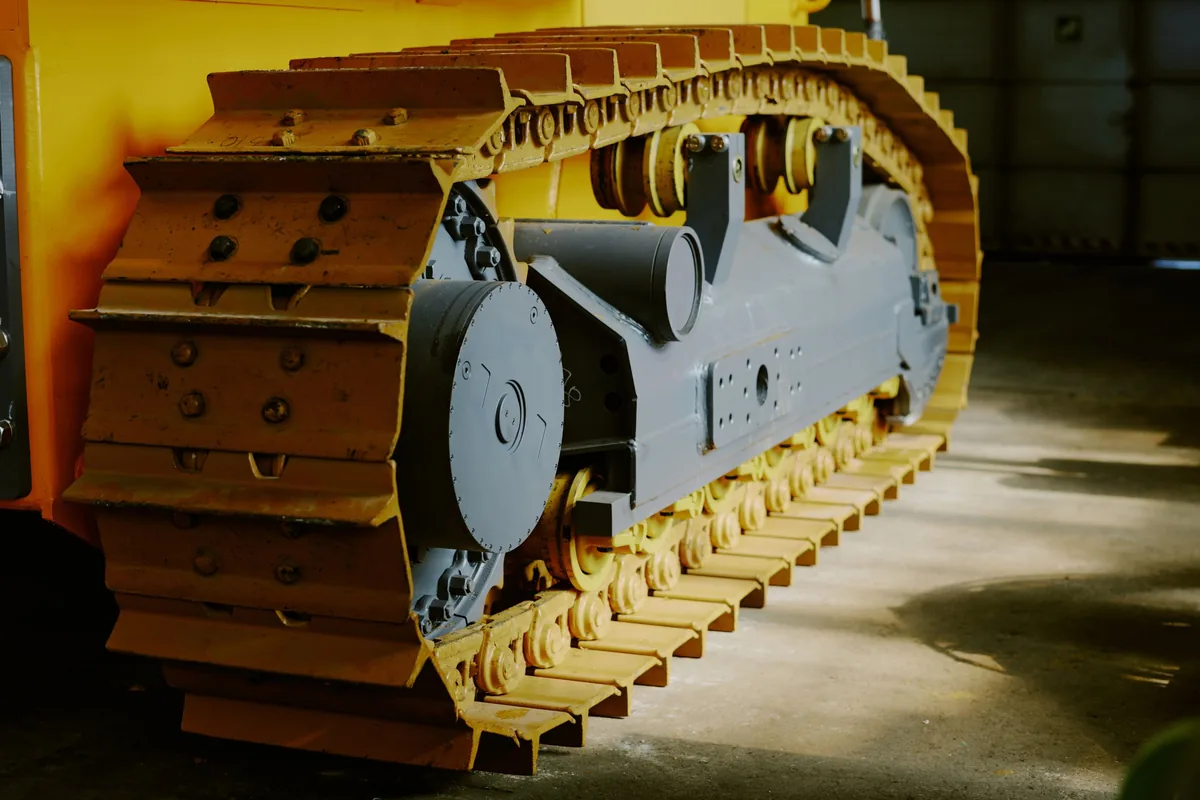
Heavy equipment
The undercarriage of a bulldozer, excavator or crawler crane absorbs every impact the machine takes. Recoil and track adjuster springs hold track tension, absorb shock loads and protect idlers, rollers and track chains.
- Shock absorption — impact and overload energy taken before it reaches tracks, idlers and rollers.
- Track tension control — chain tension held in specification, preventing de-tracking and fast wear.
- Durability in harsh duty — rugged terrain, abrasive dust and wide temperature swings, with load verified before shipment.
Typical applications: recoil spring assemblies and track adjuster units for bulldozers, excavators and crawler cranes.
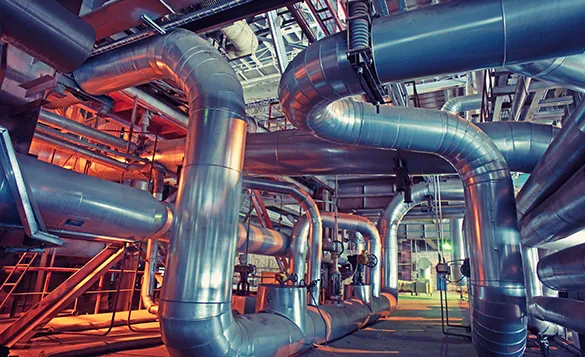
Power plant
Spring hanger supports carry the weight of steam and water piping while letting it move. As a line heats to operating temperature it grows — and the support must follow without pushing load back into the pipe, boiler or turbine.
- Thermal compensation — expansion and contraction absorbed over the full design travel.
- Load support — near-constant force throughout that travel, so the line stays where the designer put it.
- Stress reduction — reaction loads kept off nozzles and connected equipment.
Applications: pipe runs to boilers, steam turbines and auxiliary systems · retrofit and replacement hangers for plant overhauls.
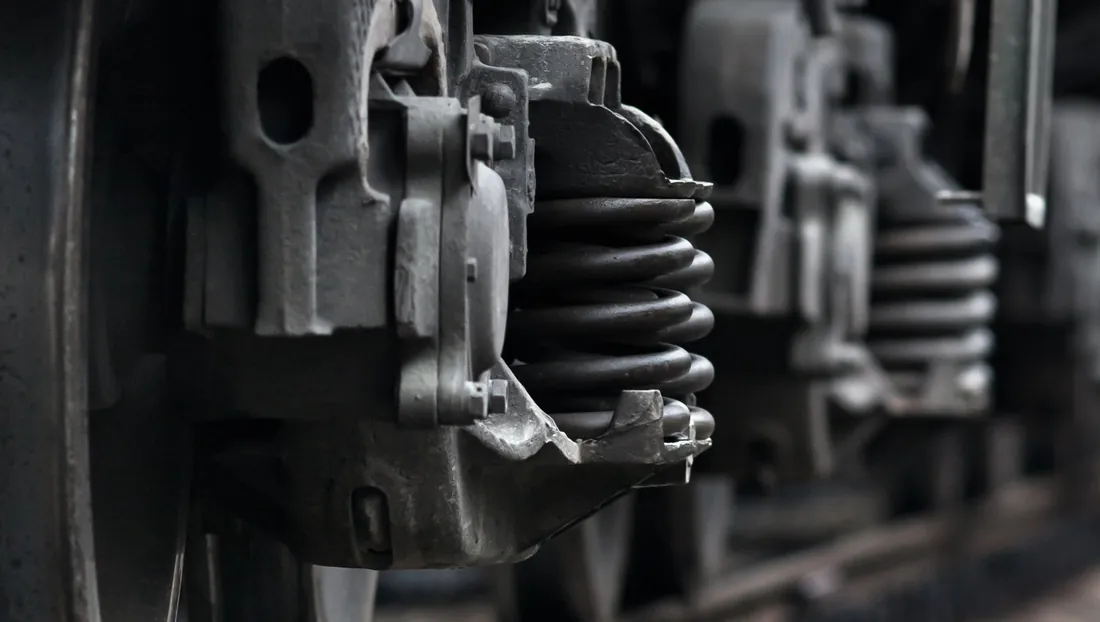
Railway
Bogie springs decide how a train rides. They carry the vehicle’s weight, absorb the shock the track sends up through the wheelset, and hold the car body stable through curves and at speed — meeting fatigue requirements measured in millions of cycles.
- Primary suspension — between wheelset and bogie frame; cuts lateral force and improves ride quality.
- Secondary suspension — between bogie and car body; isolates passengers from vibration.
- Coil and leaf springs — hot-wound alloy steel bar for high load capacity.
Functions: shock absorption · load distribution · stability through curves and high-speed running.
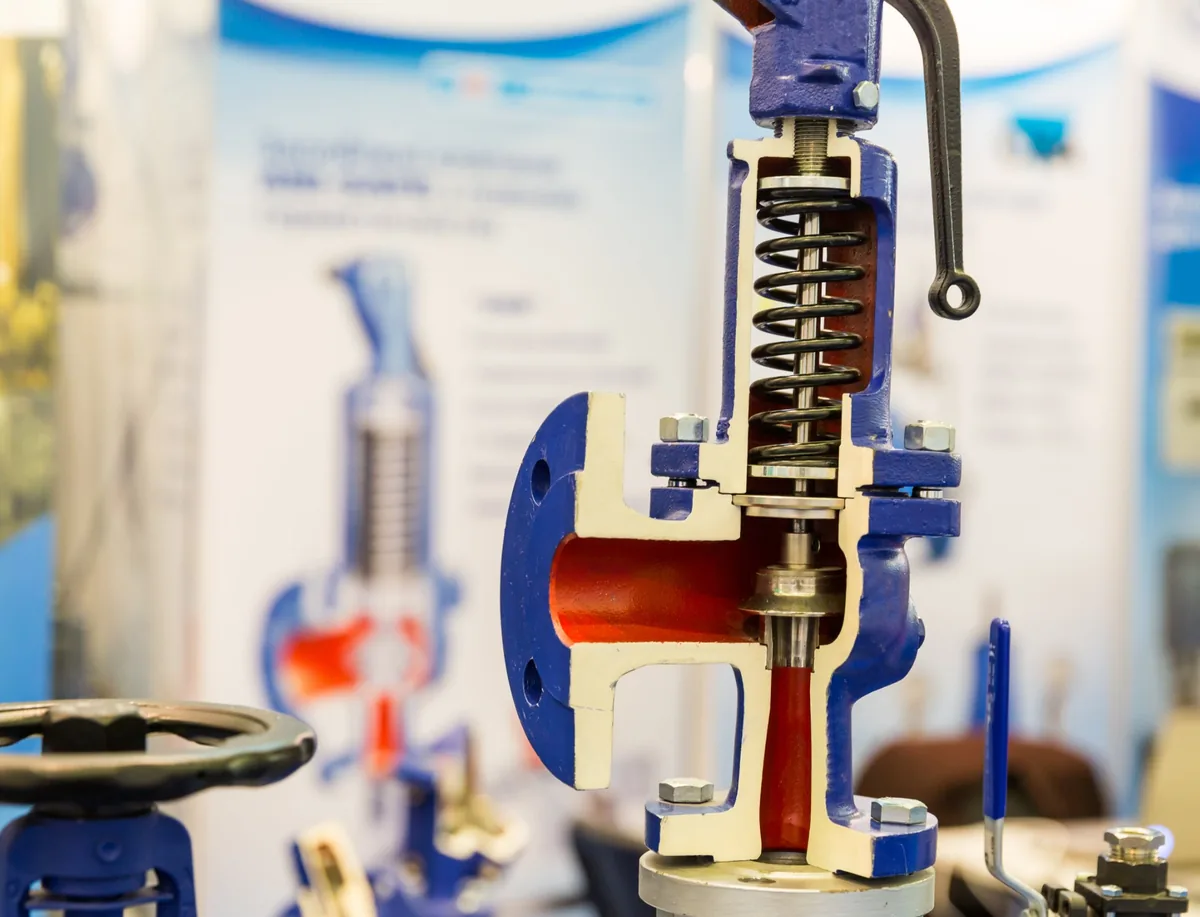
Valve & actuator
In a valve, the spring is the last line of defense. When power or control signal is lost, spring force — not electronics — returns the valve to its safe position. Spring consistency is a safety requirement, not just a performance one.
- Fail-safe return — back to the default open or closed position on power or signal loss.
- Actuation force — opens, closes or modulates the valve on the actuator signal.
- Compression & torsion springs — for sliding-stem, quarter-turn ball and butterfly valves.
Industries: oil & gas, chemical, power, HVAC, transportation and robotics.